
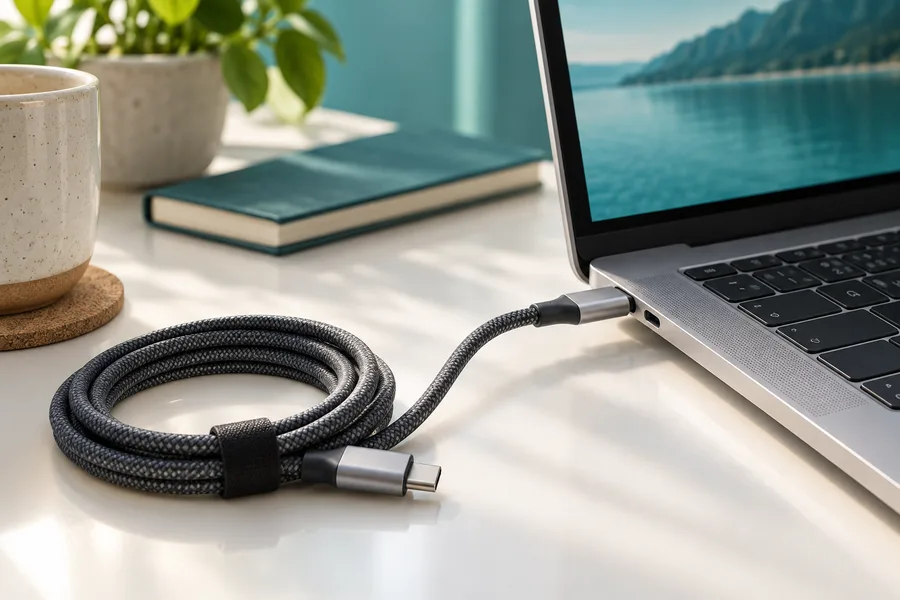
By Charging Cable · Published 14 September 2026 · 2 minute read
Start with the intended use
A charging cable must match both ends of the connection. Identify the device port and the charger port, then check the cable length and supported functions. USB C describes a connector; it does not by itself confirm every charging rate or data-transfer capability. Compare the cable specification with the device and power adapter. A longer cable can be convenient, but the correct rating remains essential.
Compare the complete specification
For multi-connector cables, confirm how the connectors are intended to be used and whether simultaneous charging is supported. Some promotional cables focus on charging rather than data transfer. Do not infer a capability from the shape of the plug. Include the device examples, quantity, colour and any branding requirements in your enquiry. The final quote should identify the cable model so replacements and repeat orders remain consistent.
Build a useful shortlist
A useful shortlist records the exact product name alongside the specification that made it suitable. Compare usb charging cables, multi-connector cables, usb c cables. Keep questions about missing details with the item rather than filling the gaps from a similar photograph. If two models seem interchangeable, ask which specification differs and how that affects your intended use.